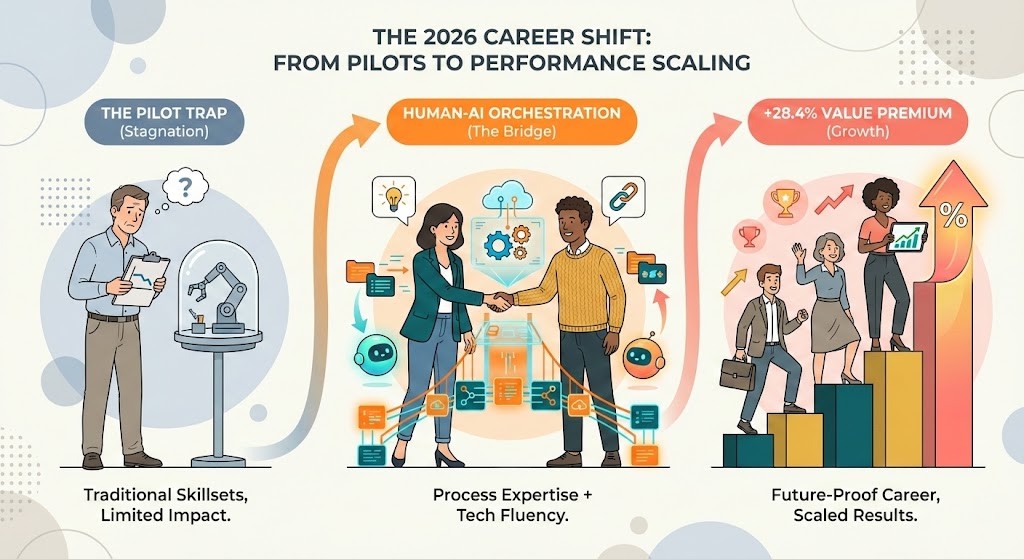
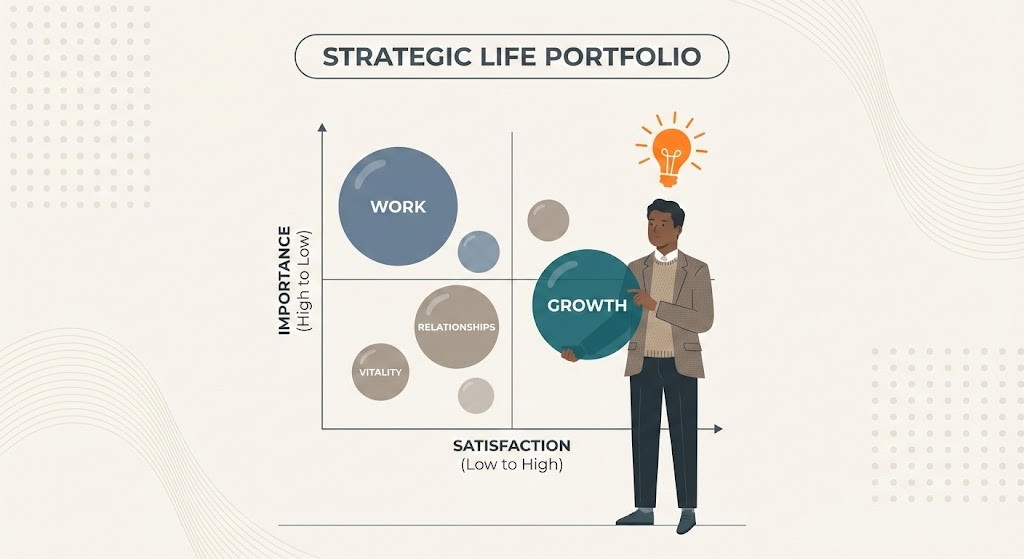
Imagine sitting in a high-stakes meeting where everyone realizes the current project is heading for a cliff, yet nobody speaks up because they aren’t sure if everyone else sees the same disaster. This is not just a communication breakdown; it is a failure to establish ‘Common Knowledge.’ According to recent labor market reports from Bloomberg and the latest employment trends, professionals who master the psychology of coordination are 40% more likely to secure leadership roles during organizational shifts. Whether you are a mid-career professional or a job seeker, understanding why certain trends like AI integration or hybrid work become ‘unstoppable’ is the key to timing your next move.
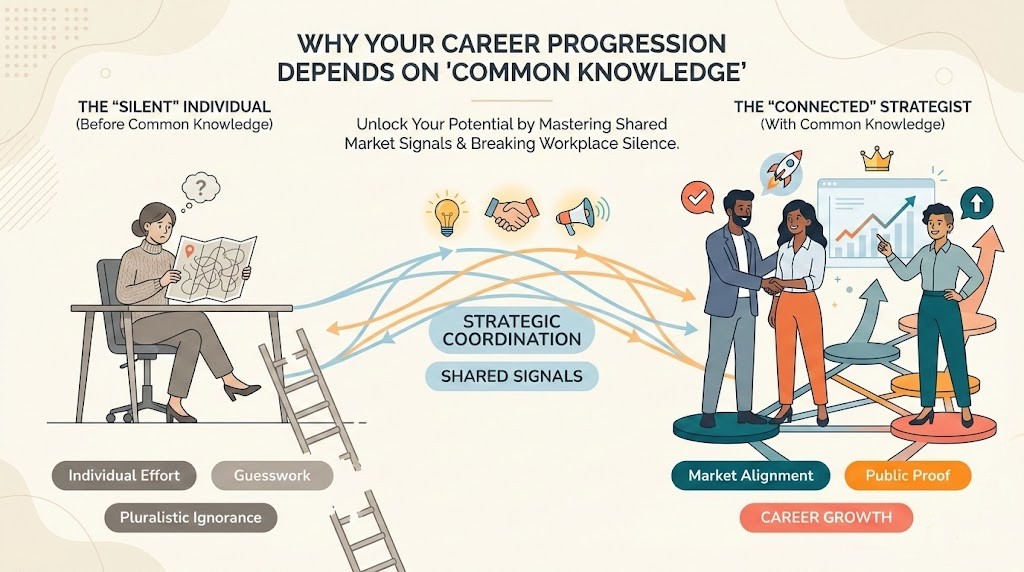
1. The Psychological Infrastructure of Market Trends
Market trends are not just about the quality of technology; they are about ‘Common Knowledge.’ As Steven Pinker noted, it is not enough for everyone to know something; everyone must know that everyone else knows it. This is why certain platforms dominate the recruitment landscape while others fail despite having better features.
1.1 The Network Effect in Recruitment Platforms
When a hiring platform like LinkedIn or a new AI-driven job board gains traction, it is because of a ‘Coordination Game.’ Candidates go where the recruiters are, and recruiters go where the candidates are. This mutual awareness creates an inescapable gravity. If you are targeting a career pivot, you must identify where the ‘Common Knowledge’ is crystallizing. In 2026, we see this shifting toward specialized AI-talent marketplaces where the shared understanding of technical competence is standardized.
1.2 Why Big Moves Require Shared Signals
Think about the Super Bowl ad strategy mentioned by Pinker. It’s not just about the massive audience; it’s about the fact that 100 million people know that 100 million other people are watching. In your career, this translates to ‘Public Proof.’ Your certifications or endorsements only carry weight when they are recognized as a standard that your peers and superiors also acknowledge. Without this shared signal, even the most impressive resume remains a private truth rather than a market reality.
| Analysis Item | Traditional Individual Approach | Common Knowledge Strategy | Actionable Implementation |
|---|---|---|---|
| Career Visibility | Focusing on private skill building | Aligning skills with industry-standard ‘Signals’ | Acquire certifications that are recognized as ‘Common Knowledge’ in your niche. |
| Networking | One-on-one private messages | Engaging in public industry forums/panels | Contribute to public discussions to establish ‘Common Knowledge’ of your expertise. |
| Market Entry | Applying to fragmented job boards | Moving to platforms with the highest ‘Coordination’ | Identify where the ‘density’ of recruiters and peers is highest. |
2. Strategic Coordination in Modern Salary Negotiations
Negotiation is rarely about a single number; it is about reaching a point where both parties know the market reality. If you approach a negotiation without data that the employer knows you have, you are at a disadvantage.
2.1 The Power of External Market Data
According to the 2025 OECD Employment Outlook, wage growth has stabilized at 3.8%, but the gap between ‘aware’ and ‘unaware’ negotiators has widened. When you cite a report from a reputable source like the U.S. Bureau of Labor Statistics, you aren’t just giving a number. You are signaling that you know the market, and you know that the employer knows the market. This creates a ‘focal point’ for agreement.
2.2 Anchoring and Publicly Verifiable Benchmarks
Effective negotiators use benchmarks that are ‘Common Knowledge.’ If a company’s quarterly earnings are public and strong, mentioning this creates a shared reality. You are effectively saying, ‘We both know the company is thriving, which makes my request for a merit-based increase logical.’ This removes the personal friction and replaces it with a shared objective truth.
3. Breaking Through Pluralistic Ignorance in the Workplace
Many toxic workplace cultures persist not because everyone likes them, but because everyone wrongly assumes everyone else likes them. This is ‘Pluralistic Ignorance.’
3.1 Identifying Outdated Corporate Norms
Whether it’s the pressure to stay late or the resistance to adopting new AI tools, these norms often survive on silence. As a career-driven professional, being the one to ‘call out’ the inefficiency—tactfully—can position you as a thought leader. However, the trick is to do it in a way that creates a new ‘Common Knowledge’ that the old way is no longer working.
3.2 Creating Safe Spaces for Truth-Telling
Alison Green often emphasizes the importance of direct but professional communication. By asking, ‘I’ve noticed many of us are struggling with the new reporting format; is anyone else finding it takes twice as long?’ you turn a private frustration into a shared fact. This allows the group to coordinate a solution rather than suffering in silence.
| Condition | Individual Experience | Shared Reality (Common Knowledge) | Professional Outcome |
|---|---|---|---|
| Inefficient Processes | “I am just slow at this.” | “The process is flawed for everyone.” | Proposal for systemic improvement. |
| Salary Stagnation | “I am not being valued.” | “Market rates for this role have risen 15%.” | Data-driven compensation review request. |
| Work-Life Balance | “I am burnt out.” | “Our team’s output peaks at 40 hours.” | Transition to sustainable high-performance culture. |
4. Building Influence Through Shared Intellectual Platforms
The final step in mastering your career is moving from being a participant in ‘Common Knowledge’ to being a creator of it. This involves positioning your insights so that they become the ‘default’ for your team or industry.
4.1 Internal Thought Leadership
Start by documenting your wins and sharing them in a way that sets a new standard. When you share a successful case study internally, you are telling your colleagues, ‘This is what success looks like now.’ Once everyone knows that everyone else has seen this success, it becomes the new benchmark for the department.
4.2 Leveraging Industry Standards for Global Mobility
For those seeking international opportunities, ‘Common Knowledge’ is even more critical. Understanding the labor laws and cultural expectations of your target country (e.g., the emphasis on ‘Feierabend’ in Germany or the high-paced ‘Bali’ digital nomad culture in Indonesia) allows you to coordinate your career moves with the local reality. Use 실시간 market data from sources like Investing.com or Bloomberg to ensure your financial expectations align with the global economic climate.
| Growth Phase | Key Metric | Strategic Shift | Expected Result |
|---|---|---|---|
| Entry/Junior | Skill Acquisition | Mastering the ‘Common Knowledge’ of the role | Fast-tracked integration and trust. |
| Mid-Career | Network Influence | Creating ‘Common Knowledge’ within the team | Recognition as a vital strategic asset. |
| Executive/Expert | Industry Shaping | Defining the ‘Common Knowledge’ for the market | High-leverage opportunities and authority. |
References
- Steven Pinker, “Knowing That Everyone Else Knows,” Harvard Business Review Video Series, 2023.
- U.S. Bureau of Labor Statistics, “Occupational Outlook Handbook: Employment Projections 2024-2034,” 2025.
- OECD, “OECD Employment Outlook 2025: Transitions in the Green and Digital Economy,” 2025.
- Bloomberg News, “The Evolution of Global Compensation Structures,” 2026.
Disclaimer
This article provides general career and psychological insights based on current market trends. It does not constitute legal, financial, or professional career coaching advice. For specific legal issues or complex salary negotiations, please consult with a qualified professional or legal counsel in your jurisdiction.