
Imagine arriving at the office at 8:45 AM, only to feel a knot in your stomach the moment you hear your colleague’s voice from the breakroom. Whether it is their constant condescension in meetings or the passive-aggressive emails that disrupt your flow, working with a person you dislike is more than an annoyance; it is a career hazard. Recent labor data from 2025 indicates that workplace conflict is a leading driver of “quiet quitting” and voluntary turnover in high-pressure sectors. With the current unemployment rate hovering near 4.0% in many developed economies and wage growth struggling to keep pace with inflation, the cost of letting a difficult relationship derail your performance is higher than ever. To protect your professional trajectory, you must move beyond mere tolerance to a strategic management of interpersonal friction.
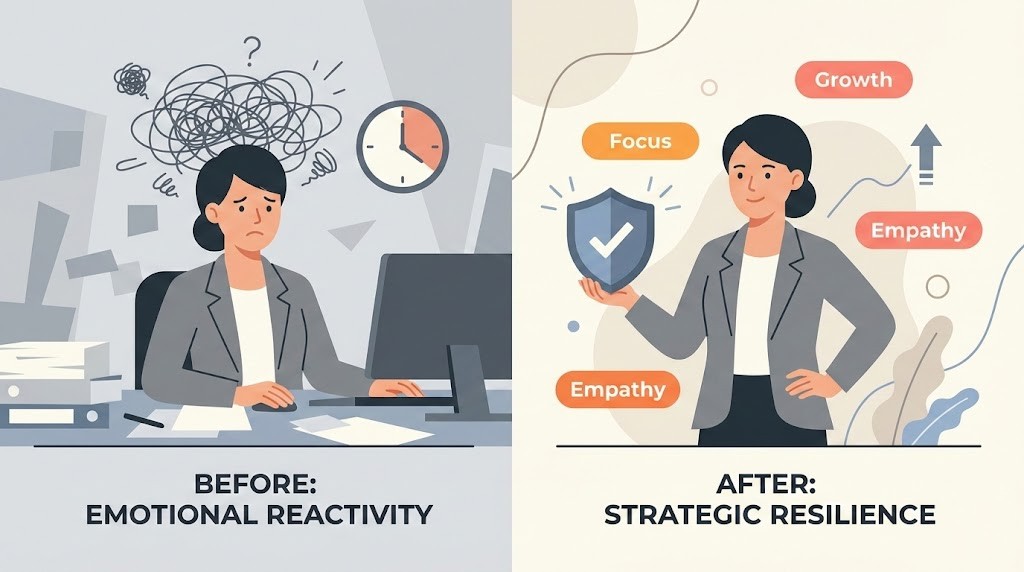
1. The Economic Cost of Workplace Conflict on Your Career
Conflict in the workplace is rarely just about personality clashes; it is a significant drain on your most valuable resource—your focus. When you spend three hours after a meeting replaying a frustrating exchange in your head, you are effectively reducing your hourly output and increasing your stress markers. This cognitive load directly impacts your ability to hit key performance indicators (KPIs) that determine your annual bonus and salary increments.
1.1 Impact on Individual Productivity and Performance Reviews
Research from 2025 labor studies suggests that employees embroiled in ongoing interpersonal conflict experience a 25% drop in task efficiency. In an era where AI-driven productivity tracking is becoming standard in HR software, these dips in performance are no longer invisible. They manifest as missed deadlines or lack of innovation, which are critical during quarterly reviews. If your goal is a promotion in 2026, you cannot afford to let a “difficult” colleague be the reason your metrics suffer.
1.2 The Hidden Costs of Turnover and Recruitment
For the individual, the cost of leaving a job solely due to a toxic peer is substantial. When factoring in the loss of unvested stock options, the gap in insurance coverage, and the psychological toll of a forced job search, the “exit strategy” is often the most expensive option. For mid-level professionals, this can represent a loss of six months’ worth of total compensation. Understanding these figures shifts the perspective from “I can’t stand them” to “I must manage them to protect my equity.”
| Analysis Item | Traditional Reaction | Strategic Shift (2026) | Practical Action Plan |
|---|---|---|---|
| Interpersonal Conflict | Avoidance or venting to peers | Neutralization for performance protection | Use “curiosity-based” questioning to deflect hostility |
| Productivity Drop | Blaming the colleague for distractions | Quantifying time lost to emotional labor | Set strict 15-minute “venting limits” then refocus |
| Exit Strategy | Resigning without a solid backup plan | Building leverage while staying put | Update CV and network while maintaining current KPIs |
2. Cognitive Reframing Techniques for Difficult Interactions
HBR’s research highlights that the most effective way to deal with someone you dislike is to stop viewing them as a personal enemy and start viewing them as a puzzle to be solved. This shift from an emotional response to an analytical one is known as cognitive reframing. It allows you to maintain professional distance while gathering the data necessary to navigate the relationship without burnout.
2.1 Adopting the Researcher Mindset
Instead of thinking, “Why are they so rude?” ask yourself, “What environmental factors trigger this behavior?” Perhaps they are under immense pressure from a specific director, or their communication style is a defense mechanism for their own insecurities. By observing them like a social scientist, you detach your ego from their actions. This detachment is your greatest shield in high-stakes corporate environments.
2.2 Separating Intent from Impact
We often judge ourselves by our intentions and others by their impact on us. However, the colleague you dislike may not be intentionally trying to sabotage you; they might simply be incompetent or have a different priority set. Recognizing that their behavior isn’t necessarily a targeted strike against your character can lower your cortisol levels and allow for more rational decision-making during collaborative projects.
3. Tactical Communication Methods to Neutralize Friction
Neutralizing a difficult relationship requires a specific set of verbal tools. The goal is not to become friends, but to create a functional working arrangement that satisfies organizational goals. In 2026, where hybrid work is the norm, these tactics must translate across both physical meetings and digital platforms like Slack or Microsoft Teams.
3.1 The Power of Curiosity-Based Questioning
When faced with a hostile or dismissive comment, respond with curiosity rather than defensiveness. Phrases like, “That is an interesting perspective; can you help me understand the data that led to that conclusion?” force the other person to move from emotion to logic. It puts the burden of proof on them and often de-escalates the tension by signaling that you are focused on the work, not the drama.
3.2 Standardizing the Interface
If interpersonal interactions are the problem, move as much communication as possible to standardized formats. Use project management tools to document requests and feedback. This creates a “paper trail” that discourages unprofessional behavior and ensures that your contributions are visible to leadership, regardless of the personal feelings of your peers.
| Communication Channel | Risk Factor | Stabilization Strategy | 2026 Tool Recommendation |
|---|---|---|---|
| Video Calls | Micro-aggressions and interruptions | Agenda-driven meetings with recorded transcripts | Otter.ai or built-in Teams AI Recap |
| Direct Messaging | Misinterpreted tone and urgency | Wait 5 minutes before replying to “heated” pings | Slack ‘Scheduled Send’ for non-urgent replies |
| In-person Meetings | Body language cues and power plays | Strategic seating and neutral body posture | Physical notebook for active listening/shielding |
4. Long-term Career Resilience and Boundary Setting
Ultimately, your career longevity depends on your ability to set boundaries that protect your mental health without appearing uncooperative. Professional resilience is the capacity to thrive even in less-than-ideal team environments. This involves building a robust support network outside of your immediate team to provide perspective and emotional balance.
4.1 Cultivating an External Support System
Don’t let your work life be your only life. Engaging with industry mentors, professional associations, or even hobby groups provides a vital outlet. When you have a strong sense of identity outside of your 9-to-5, a difficult colleague’s comments carry much less weight. They become a small variable in a much larger, more successful life equation.
4.2 Knowing When to Escalate or Pivot
Boundaries also mean knowing the limit. If a relationship crosses the line into harassment or systemic bullying—which is increasingly scrutinized under modern labor laws—you must know the proper channels for escalation. Documenting specific instances with dates, witnesses, and impacts is crucial. If the organization refuses to address toxic behavior that hinders performance, then a strategic pivot to a new role becomes a proactive career move, not a desperate escape.
| Resilience Pillar | Description | Success Metric | Action Item |
|---|---|---|---|
| Emotional Detachment | Viewing work as a series of tasks, not personal validation | Zero “ruminating” hours at home | Practice the ’10-10-10′ rule for conflicts |
| Professional Documentation | Keeping a log of achievements and frictions | Readiness for HR or performance discussions | Weekly ‘Success & Struggle’ journal |
| Network Diversity | Having mentors in different companies | 3+ reliable external career advisors | One coffee chat per month outside the firm |
References
- Harvard Business Review, “How to Work with Someone You Hate,” 2022 (Original Source)
- Society for Human Resource Management (SHRM), “The State of Workplace Culture Report,” 2025
- Bureau of Labor Statistics / OECD, “Quarterly Employment and Wage Growth Index,” 2026
- CIPD, “Conflict Management in the Modern Workplace: Economic Impacts,” 2025
Disclaimer
This article is provided for informational and educational purposes only and does not constitute legal or professional career coaching advice. If you are experiencing severe workplace harassment or mental health distress, please consult with a qualified HR professional, legal counsel, or mental health expert in your jurisdiction. The strategies discussed are intended to manage professional friction and may not be applicable in cases of illegal workplace conduct.