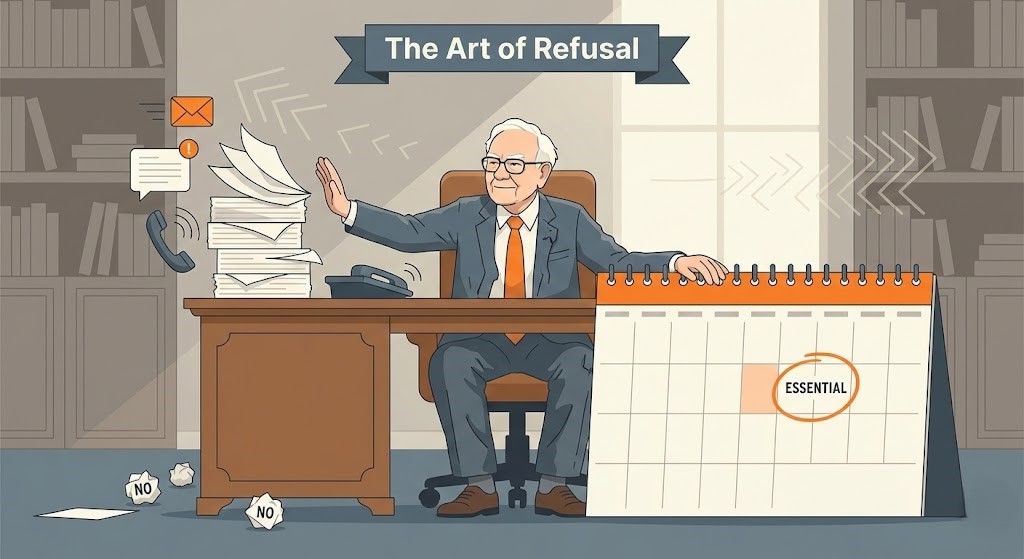
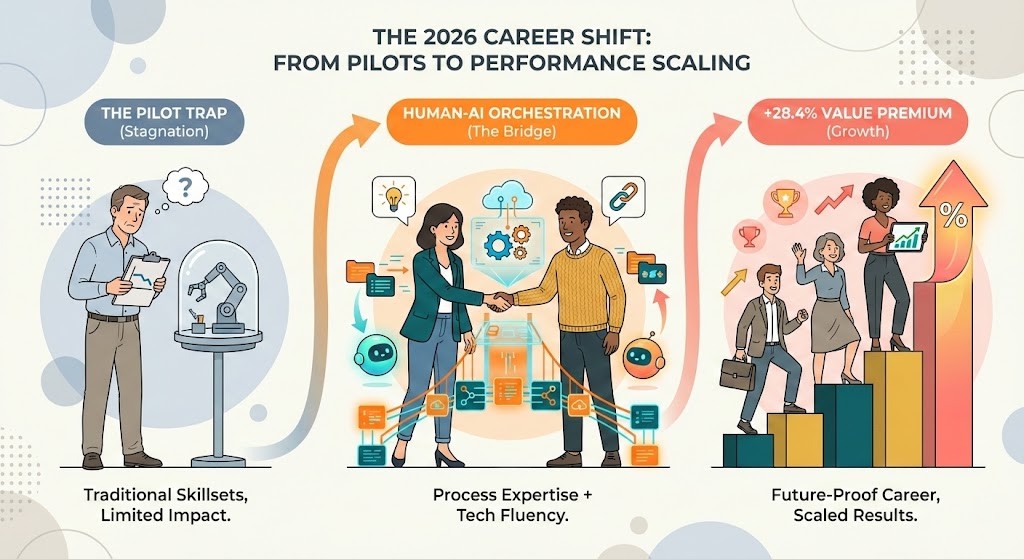
Imagine Mark, a 42-year-old software architect in Seattle. It is January 2026, and despite the tech sector’s marginal recovery with a 2.1% growth rate according to recent Bloomberg data, he feels stuck. The ‘Big Stay’ phenomenon—where high interest rates and cautious corporate hiring have frozen the job market—means his dream of jumping to a unicorn startup is on hold. Mark isn’t just tired; he is strategically bankrupt. He realizes that while he has been optimizing his company’s cloud infrastructure, he hasn’t updated his own life strategy since 2019. Like many of us, he is discovering that in 2026, ‘winning’ at work is no longer enough to guarantee a great life.
1. Redefining Success in the 2026 Stagnant Labor Market
For decades, we have been conditioned to view our careers as a linear ladder. You climb, you earn more, and you eventually reach the top. However, the economic landscape of 2026 has shattered this illusion. With the International Monetary Fund projecting a modest global growth of 3.2% and traditional middle-management roles being increasingly automated by sophisticated AI agents, the old definition of success—money, fame, and power—is proving to be a hollow metric. We are witnessing what experts call hedonic adaptation on a global scale: even those receiving the average 3.5% wage increase find their satisfaction levels returning to baseline almost instantly due to rising costs of living and social comparison.
1.1 Moving from Winning to Living
Strategy in the boardroom is about positioning an organization to win. But in the context of a human life, ‘winning’ is a poorly defined goal. A true life strategy is an integrated set of choices that positions you to live a ‘great life.’ This shift requires us to look beyond the quarterly review and consider our overall well-being. According to the PERMA-V model—encompassing Positive Emotions, Engagement, Relationships, Meaning, Achievement, and Vitality—career success is only one-sixth of the equation. If your job is providing achievement but draining your vitality and destroying your relationships, your current ‘corporate strategy’ is actually failing you as an individual.
1.2 The Impact of the 2026 Jobless Boom
The current labor market is paradoxical. We see low unemployment rates in sectors like healthcare and green energy, yet a ‘Jobless Boom’ persists in white-collar industries where output increases without additional hiring. This stagnation makes the cost of a ‘bad’ career move exceptionally high. Strategic thinking is no longer an optional skill for executives; it is a survival mechanism for every worker. You must stop seeing yourself as an employee and start seeing yourself as a portfolio manager of your own existence.
| Analysis Aspect | Conventional Mindset | 2026 Strategic Mindset | Practical Implementation |
|---|---|---|---|
| Primary Goal | Title and Salary Growth | Holistic Life Satisfaction (PERMA-V) | Audit life units beyond the workplace |
| Time Management | Overtime as a Badge of Honor | Strategic Allocation of 168 Hours | Cap ‘Low Satisfaction’ activities |
| Market Approach | Reactive Job Seeking | Proactive Portfolio Diversification | Invest in ‘Resilience’ skills annually |
2. Building Your Strategic Life Portfolio: The 16-Unit Framework
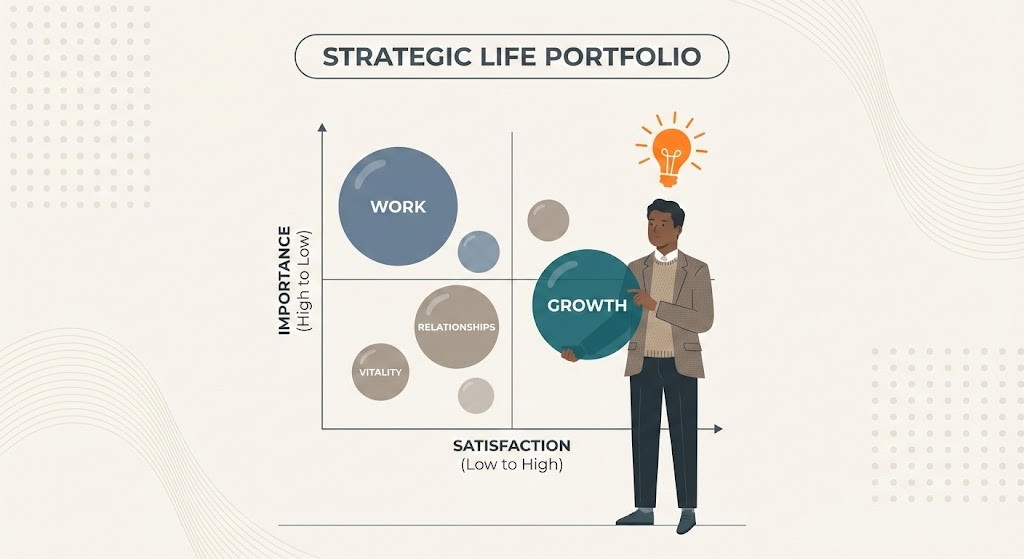
In the world of consulting, we use the BCG Matrix to evaluate business units. In your life, you have Strategic Life Units (SLUs). These are the specific areas where you invest your three most precious resources: time, money, and energy. Most people focus on only one or two units—usually work and perhaps family—leaving the rest of their portfolio neglected and underfunded. To regain control, you must first identify what is actually in your portfolio. There are 16 core units we identify, ranging from your significant other and physical health to faith, hobbies, and even your relationship with digital entertainment.
2.1 Categorizing Your Life Units
These 16 units are typically bundled into six strategic areas. By categorizing them, you can see where your ‘investments’ are concentrated. For many, the ‘Work’ area occupies 60% of their energy, while ‘Vitality’ (sleep, exercise, nutrition) and ‘Relationships’ (friends, community) are treated as afterthoughts. In 2026, where the boundary between home and office has blurred into a permanent ‘hybrid haze,’ failing to set boundaries between these units leads to systemic burnout. You cannot expect a business to thrive if 90% of its capital is stuck in a declining market; similarly, you cannot expect your life to thrive if all your energy is stuck in a stagnant job.
2.2 Assessing Importance vs. Satisfaction
The core of this strategy lies in rating each unit on two scales: How important is this to me (0-10)? and How satisfied am I with this right now (0-10)? This honesty is often painful. You might find that your ‘Relationship with Children’ is a 10 in importance but a 3 in satisfaction because you are always on your phone during dinner. Conversely, ‘Online Entertainment’ might have an importance of 2 but a satisfaction of 8 because it is an easy escape. Recognizing this imbalance is the first step toward a strategic pivot.
| Strategic Life Unit Area | Typical 2026 Pain Point | Strategic Shift Required | Desired Outcome |
|---|---|---|---|
| Career & Growth | Stagnation in ‘Big Stay’ market | Focus on transferable resilience skills | Increased marketability and autonomy |
| Vitality & Health | Chronic burnout and AI-stress | Prioritize ‘Non-Negotiable’ recovery | Sustained energy for long-term goals |
| Social & Community | Isolation despite digital connection | Rebuild deep, in-person networks | Emotional safety net during crises |
3. The 168-Hour Resource Audit: Mapping Importance vs. Satisfaction
Every single person on this planet is given the same budget: 168 hours a week. There are no loans, no extensions, and no overdrafts for time. A strategic life portfolio requires you to map where these hours are going. When we plot these units on a 2×2 matrix—Importance on the Y-axis and Satisfaction on the X-axis—the size of the ‘bubble’ (the time you spend) reveals the truth about your priorities. In 2026, we see a disturbing trend: the largest bubbles are often in the ‘Low Importance, High Satisfaction’ quadrant (like mindless scrolling) or the ‘High Importance, Low Satisfaction’ quadrant (urgent but draining work tasks).
3.1 Identifying the Urgent Quadrant
The upper-left corner of your matrix—High Importance but Low Satisfaction—is your ‘Urgent Strategic Area.’ For a job seeker in 2026, this might be ‘Professional Networking.’ It is crucial for their future, yet they find it draining and ineffective in a frozen market. If a unit falls here, it requires an immediate change in tactics. Instead of doing more of the same, you must analyze why the satisfaction is low. Is it the environment, the people, or the lack of clear goals? Strategy is about making hard choices to move bubbles from the left side of the matrix to the right.
3.2 Reducing the ‘Social Media’ Bubble
One of the most common findings in 2026 life audits is the disproportionate size of the ‘Digital Distraction’ bubble. While it provides short-term satisfaction, its importance is near zero. To free up resources for your ‘High Importance’ units, you must ruthlessly prune these low-value activities. This isn’t just about willpower; it’s about strategic divestment. Just as a company sells off an underperforming asset, you must ‘divest’ from habits that do not serve your long-term vision of a great life.
4. Executing the Pivot: Small Wins for Career Resilience
The final step is not a grand, sweeping life change. In a volatile 2026 economy, radical moves can be risky. Instead, we look for ‘Strategic Pivots’—small, calculated shifts in resource allocation that yield high impact. Luck, as Seneca famously noted, is what happens when preparation meets opportunity. By strategizing your life now, you are not predicting the future; you are preparing your ‘vessel’ so that when the winds of the market eventually shift, you are ready to sail toward the right port.
4.1 Reconnecting for Success
A quick win in any life strategy is the ‘Reconnection Pivot.’ Relationships are the highest-leverage unit in your portfolio. In the next 20 minutes, reach out to three people who are important to you but from whom you’ve drifted. This simple act increases your ‘Social Capital,’ which according to a 2025 LinkedIn Global Report, is still the number one factor in securing roles in a stagnant market. It moves a ‘High Importance’ unit toward higher satisfaction with minimal time investment.
4.2 Setting Your Direction
Without a direction, no wind is favorable. Use the data from your 168-hour audit to set one clear objective for the next quarter. Perhaps it is reducing your work bubble by 5 hours to invest in a ‘Vitality’ unit. Or maybe it is shifting your ‘Learning’ unit focus from general knowledge to specific AI-collaboration skills that are currently commanding a premium in the 2026 market. Your life strategy is a living document. Review it, adjust the bubbles, and remember that you are the architect, not just the occupant, of your career and life.
| Pivot Strategy | Action Step | Time Investment | Expected 2026 Benefit |
|---|---|---|---|
| Resource Divestment | Delete one high-drain, low-value app | 5 Minutes | +10 hours of weekly focus time |
| Capital Reinvestment | Schedule one ‘Vitality’ block/week | 1-2 Hours | Reduced burnout risk by 30% |
| Networking Pivot | Send 3 ‘No-Agenda’ messages | 15 Minutes | Hidden job market access |
References
- International Monetary Fund (IMF), World Economic Outlook Update: Structural Stagnation and the Labor Market, 2026.
- Deloitte, 2026 Global Human Capital Trends: The Rise of the Life Portfolio, 2025.
- Harvard Business Review, Strategize Your Life: Seven Steps to a Great Life, 2024.
- Morgan Stanley Research, The Future of Work 2026: AI Integration and the ‘Big Stay’, 2025.
Disclaimer
This article is provided for informational purposes only and does not constitute professional career or financial advice. The economic indicators and market trends discussed reflect the specific context of 2026 and may vary by region and industry. For personalized career strategy, please consult with a certified professional counselor or financial advisor.