Imagine this scenario: It is 11:30 PM on a Tuesday. You are a 38-year-old project manager who promised yourself you would go to bed early. Instead, you are frozen on the couch, scrolling through short-form videos while finishing a second glass of wine. You are not even enjoying it anymore; you are simply seeking a baseline feeling of normalcy. This is not just a “bad habit” or a lack of willpower. You are fighting against a trillion-dollar “Addiction Economy” designed to exploit your brain’s reward circuitry. In 2026, the lines between digital consumption, substance use, and behavioral dependency have blurred. This analysis explores the neuroscience of why we get stuck and provides evidence-based strategies to regain control of your dopamine baseline.
1. The Neuroscience of Progressive Narrowing
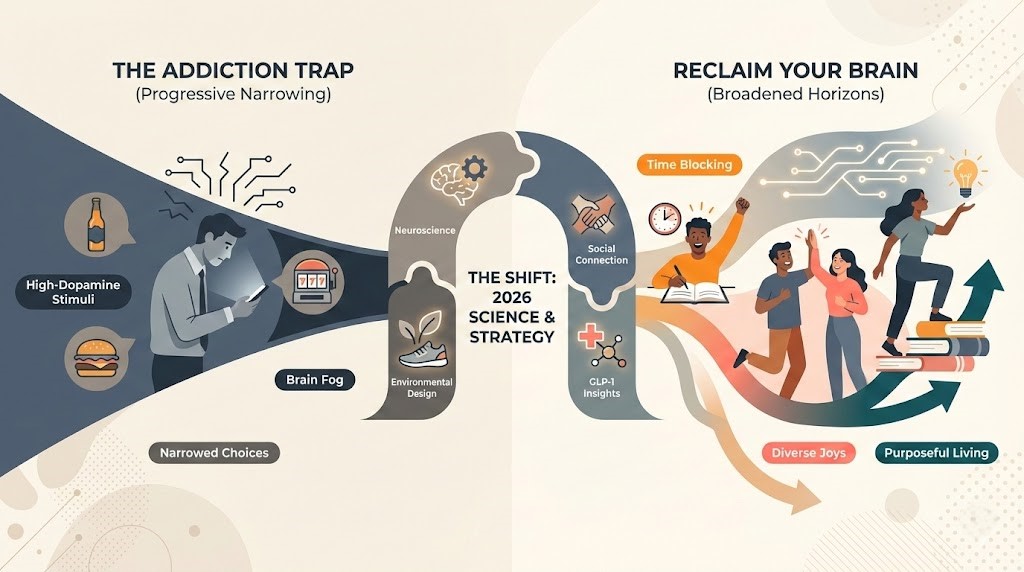
Dr. Keith Humphreys, a leading expert in addiction from Stanford University, defines addiction not merely by the substance consumed, but by a behavioral pattern called “progressive narrowing.” In the early stages of life, our sources of joy are abundant: sports, reading, relationships, career achievements, and hobbies. However, as the brain’s reward system becomes hijacked by high-dopamine stimuli (alcohol, opioids, gambling, or algorithmic feeds), these other pleasures cease to register.
1.1 The Dopamine Balance Mechanism
Our brains operate on a delicate balance of pain and pleasure. When you engage in a high-dopamine activity, the brain eventually counteracts this surge by tipping the scale toward pain (dysphoria) to maintain homeostasis. This is why the “crash” follows the high. Chronic exposure leads to a state where the baseline level of dopamine drops below normal. Consequently, you no longer consume the substance to feel good, but simply to feel “normal” and avoid the pain of withdrawal. This biological reality explains why “just stopping” is incredibly difficult without structural support.
1.2 The Misconception of Moderate Use
Recent data challenges the long-held belief that moderate alcohol consumption offers health benefits. The World Health Organization and recent studies verified in 2025 indicate that the carcinogenic risks of alcohol (particularly for breast and esophageal cancer) outweigh potential cardiovascular benefits, which were often statistical anomalies in older studies. Understanding that alcohol is a net negative for cellular health is the first step in re-evaluating one’s relationship with “social drinking.”
| Analysis Factor | Traditional View (Outdated) | Current Scientific Reality (2026) | Actionable Strategy |
|---|---|---|---|
| Alcohol & Health | Moderate drinking promotes heart health. | No safe level for cancer risk; impacts sleep architecture. | Adopt “Sober Curious” or limit to special occasions only. |
| Cannabis Potency | A mild, natural herb (THC < 5%). | Engineered products with 20-80% THC concentration. | Treat modern cannabis as a potent pharmaceutical, not a plant. |
| Digital Habits | Passive entertainment. | Active dopamine mining by algorithms. | Implement strict “tech-free zones” in the bedroom. |
2. The Profit Model of Modern Addiction
We must recognize that we are consumers in an “Addiction-for-Profit” ecosystem. Industries ranging from Big Tech to Big Alcohol maximize shareholder value by maximizing user frequency and intensity of consumption.
2.1 The Engineering of Potency
In the 1970s and 80s, cannabis generally contained 3-5% THC. Today, dispensaries sell concentrates and edibles ranging from 20% to 90% purity. This exponential increase in potency has correlated with a rise in psychosis and dependency rates, particularly among young adults whose prefrontal cortexes are still developing. The industry’s narrative often conflates modern high-potency products with the milder versions of the past, misleading consumers about the risks.
2.2 The Attention Economy
Social media platforms utilize variable reward schedules—the same psychological mechanism found in slot machines—to keep users engaged. Every notification is a potential dopamine hit. This constant fragmentation of attention reduces our capacity for “deep work” and sustained focus, creating a cycle of digital dependency that mirrors substance abuse. The economic cost is visible in reduced workplace productivity and increased rates of anxiety disorders.
3. Medical and Social Interventions for Recovery
Recovery is not a solitary journey of willpower; it requires biological support and social infrastructure. Two major developments are reshaping the landscape of addiction treatment in 2026.
3.1 GLP-1 Agonists and Craving Reduction
Originally approved for diabetes and weight loss, GLP-1 agonists (such as Semaglutide) are showing promise in treating addiction. By acting on the brain’s reward centers, these medications appear to dampen the “noise” of craving, not just for food, but for alcohol and nicotine. While not a magic bullet, they offer a pharmacological tool to help individuals bridge the gap between active addiction and early sobriety, allowing the brain’s dopamine baseline to reset.
3.2 The Science of Mutual Help Groups
Despite the rise of high-tech solutions, old-school “mutual help” groups like Alcoholics Anonymous (AA) or SMART Recovery remain statistically among the most effective interventions. The mechanism is now better understood: these groups provide “social reinforcement” and accountability. They replace the social network of drug-using peers with a network of recovery-focused peers. This social restructuring is crucial because addiction often thrives in isolation.
| Intervention Type | Mechanism of Action | Target Demographic | Expected Outcome |
|---|---|---|---|
| GLP-1 Agonists | Reduces reward center activation. | Individuals with metabolic & addiction issues. | Reduced cravings and impulse control. |
| 12-Step Programs | Social bonding and accountability. | Those seeking community support. | Long-term behavioral change and stability. |
| Dopamine Detox | Resets homeostatic baseline. | High-functioning digital/stimulant users. | Restored focus and natural joy response. |
4. Strategic Environmental Design for Sobriety
To break the cycle of progressive narrowing, one must actively design an environment that reduces friction for healthy behaviors and increases friction for destructive ones.
4.1 Friction Management
Willpower is a finite resource that depletes throughout the day. Do not rely on it. Instead, increase the “activation energy” required to engage in bad habits. If you struggle with alcohol, do not keep it in the house. If social media is the issue, use apps that physically block access during work hours. Conversely, make healthy choices easier: have gym clothes packed the night before, or keep a book on your pillow to replace the phone.
4.2 Rebuilding the Reward System
Recovery involves relearning how to enjoy low-dopamine activities. This process takes time, often 30 to 90 days, for the brain’s receptor density to normalize. During this period, engage in “Type 2 Fun”—activities that are challenging in the moment but rewarding in retrospect, such as hiking, learning a language, or volunteering. These build genuine self-efficacy, unlike the cheap dopamine of consumption.
References
- Stanford University School of Medicine, “Addiction: A Progressive Narrowing of Things That Bring You Pleasure,” 2024.
- World Health Organization, “No level of alcohol consumption is safe for our health,” 2023.
- National Institute on Drug Abuse (NIDA), “Cannabis Potency Data and Health Effects,” 2025.
- Global Wellness Institute, “The Future of Wellness 2026 Trends Report,” 2026.
Disclaimer
The content provided here is for informational purposes only and does not constitute medical advice. If you or someone you know is struggling with substance use or mental health issues, please consult a qualified healthcare professional or contact a local addiction support helpline immediately.